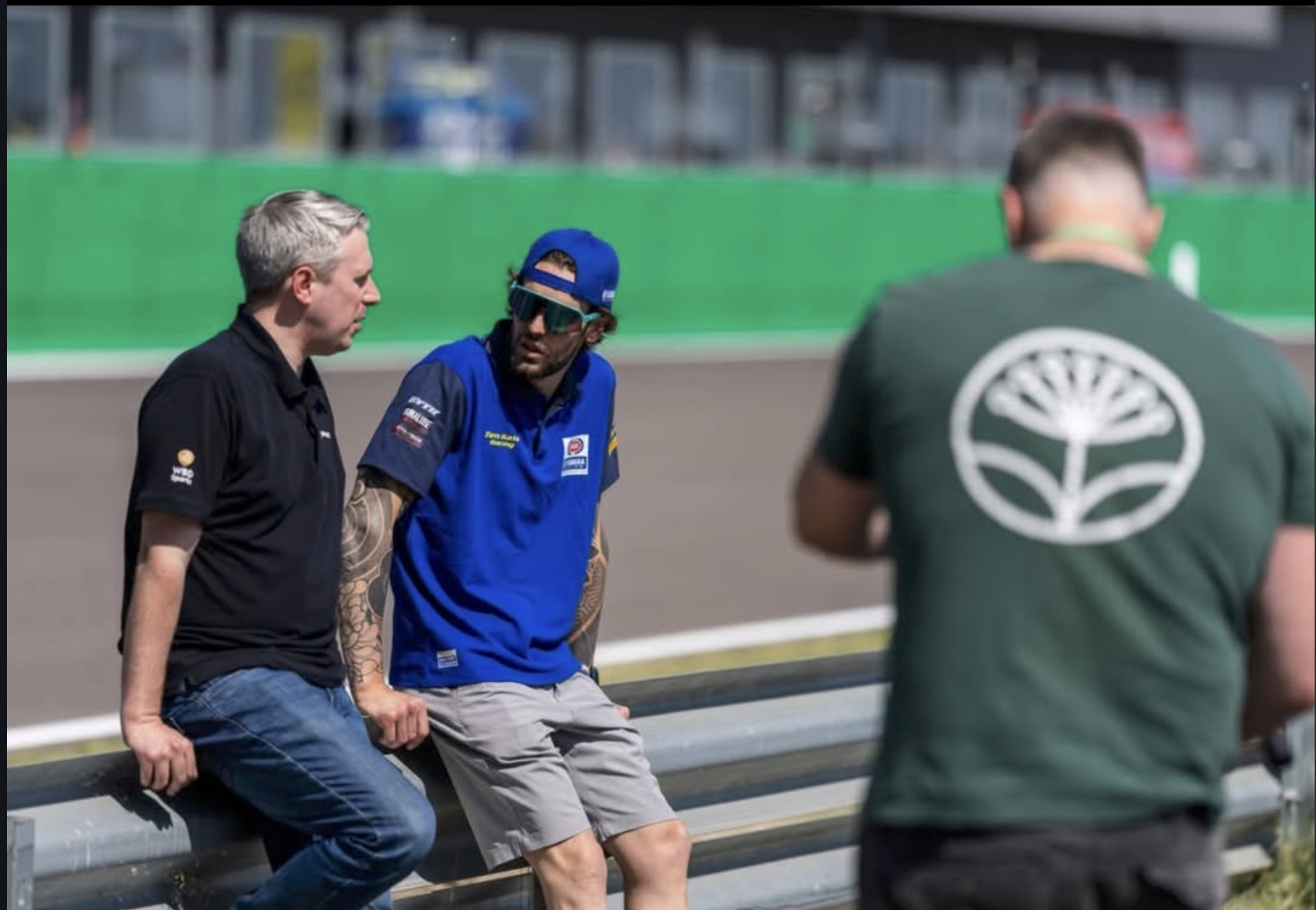
One of my absolute favourite regular gigs is working as the ENG and RF Camera Operator for the World Superbikes Championship, broadcasting all the high-octane action for TNT Sports in the UK.
It is fast, it is furious, and it is a masterclass in why preparation and a "story-first" mindset matter.
Media Day: The Thursday Marathon
Race week kicks off on Thursday, which is our official media day. My mission? Shoot all the VT packages that will form the backbone of TNT’s WSBK Championship presentation. We’re talking anywhere between 8 to 12 separate shoots packed into a single day. One minute we're capturing intimate rider interviews, the next we're diving into deep-dive technical breakdowns, historical deep-dives, or track features.
It is a beautiful, hectic sprint between the paddock, the pit lane, hospitality, and the track itself. (last time we hit Donington Park, my step counter clocked over 25,000 steps before downing tools for the day!).
With a tight-knit crew of three—myself, my producer, and our presenter—sticking to the schedule is everything. Because every single VT has a different aesthetic and distinct technical requirements, planning our kit choices is key. Once the footage is captured, it’s a race against time to get back to the London gallery via media management platforms so the editors can start weaving their magic.
By Friday, the engines are roaring for practice laps. My job shifts to capturing "colour"—grabbing those crucial extra B-roll shots of the featured riders and filming pre-records with our presenters to give the London editing suite everything they need to make the broadcast pop.
Leaner, Smarter, Faster: The LiveU Evolution
When Saturday and Sunday roll around, the energy shifts from pre-recorded packages to the thrill of live transmission.
In my first years on the job, we’d rock up to the circuit with a small on-site team of 10 to 12 people—multiple camera operators, sound recordists, vision guarantees, and a technical manager, all tied together with seamless, real-time talkback to London.
This season, things look a little different. The footprint is leaner. The larger crew has been scaled back, and instead of an RF truck setup, we’re beaming our pictures and sound straight back to London using a bit of kit called a LiveU. What’s a LiveU? It's an extraordinary piece of technology that uses bonded cellular networks to transmit high-definition, broadcast-quality video from almost anywhere on earth.
While it feels like absolute magic, it does come with a catch: cellular bonding requires a slight transmission delay to keep the feed stable. When your London gallery is watching footage that happened 5 to 10 seconds ago, traditional real-time talkback direction goes right out the window.
Thriving in the Deep End
What does that mean for me? It means more responsibility, more autonomy, and a whole new creative challenge.
Suddenly, I’m not just operating the lens. I’m managing the LiveU feed, monitoring the sound at the source, and maintaining focus and exposure entirely on my own (exposure is usually handled by the geniuses inside an OB truck). Crucially, I have to think exactly like the director, thinking how they would want shots framed for live on-screen graphics, always asking myself: How does this frame best tell the story of the race weekend?
If you talk to anyone in telly, they’ll tell you that the true joy of the job is the camaraderie of the crew on site. I definitely miss the big weekend family we used to have in the paddock. But I like to think I thrive on the creative problem-solving this lean setup demands.
Our goal now is to make the broadcast feel just as polished, and immersive as it did with a bigger crew. It's about keeping the heart of the sport front and centre—hopefully we’re nailing it.