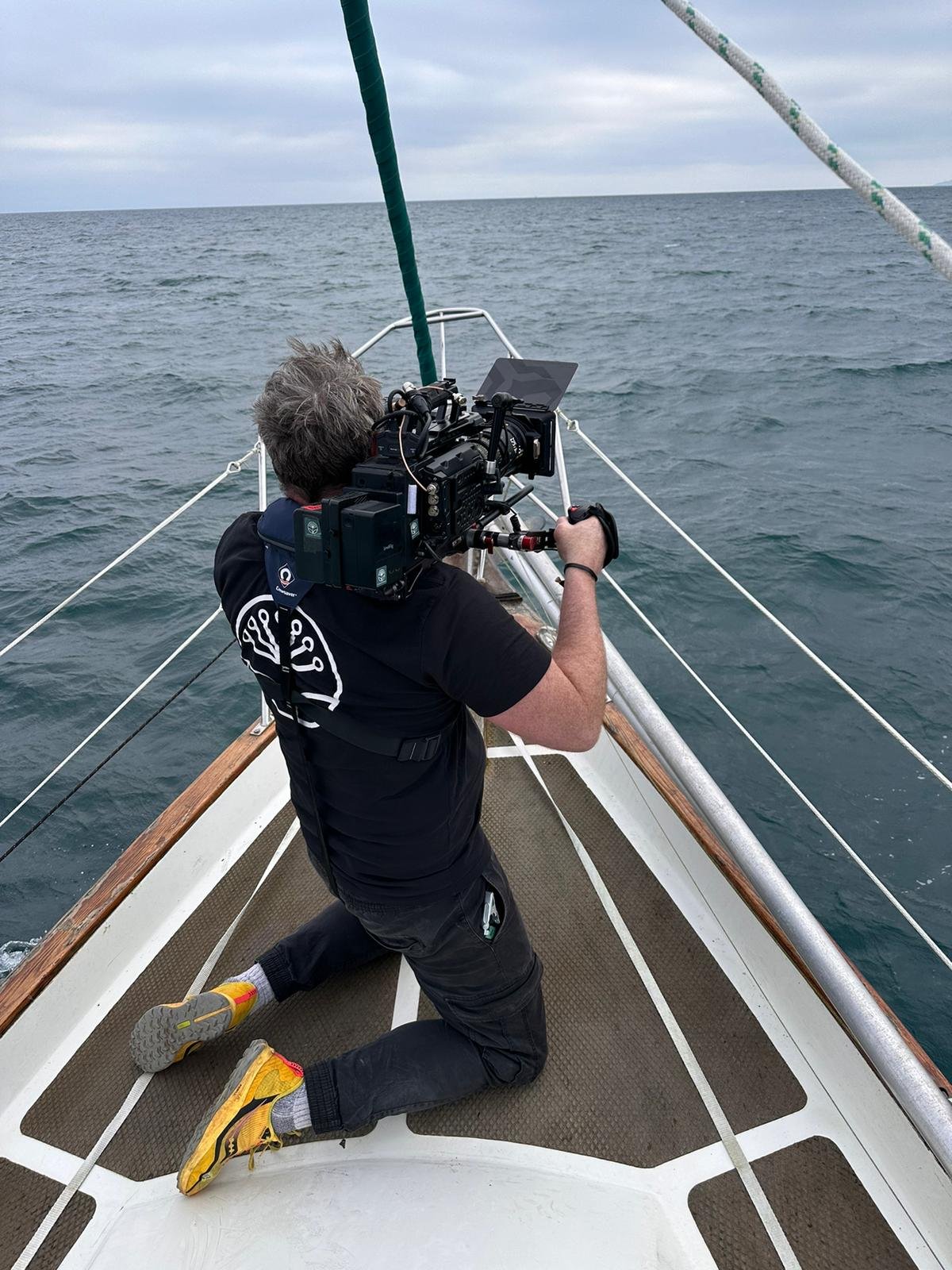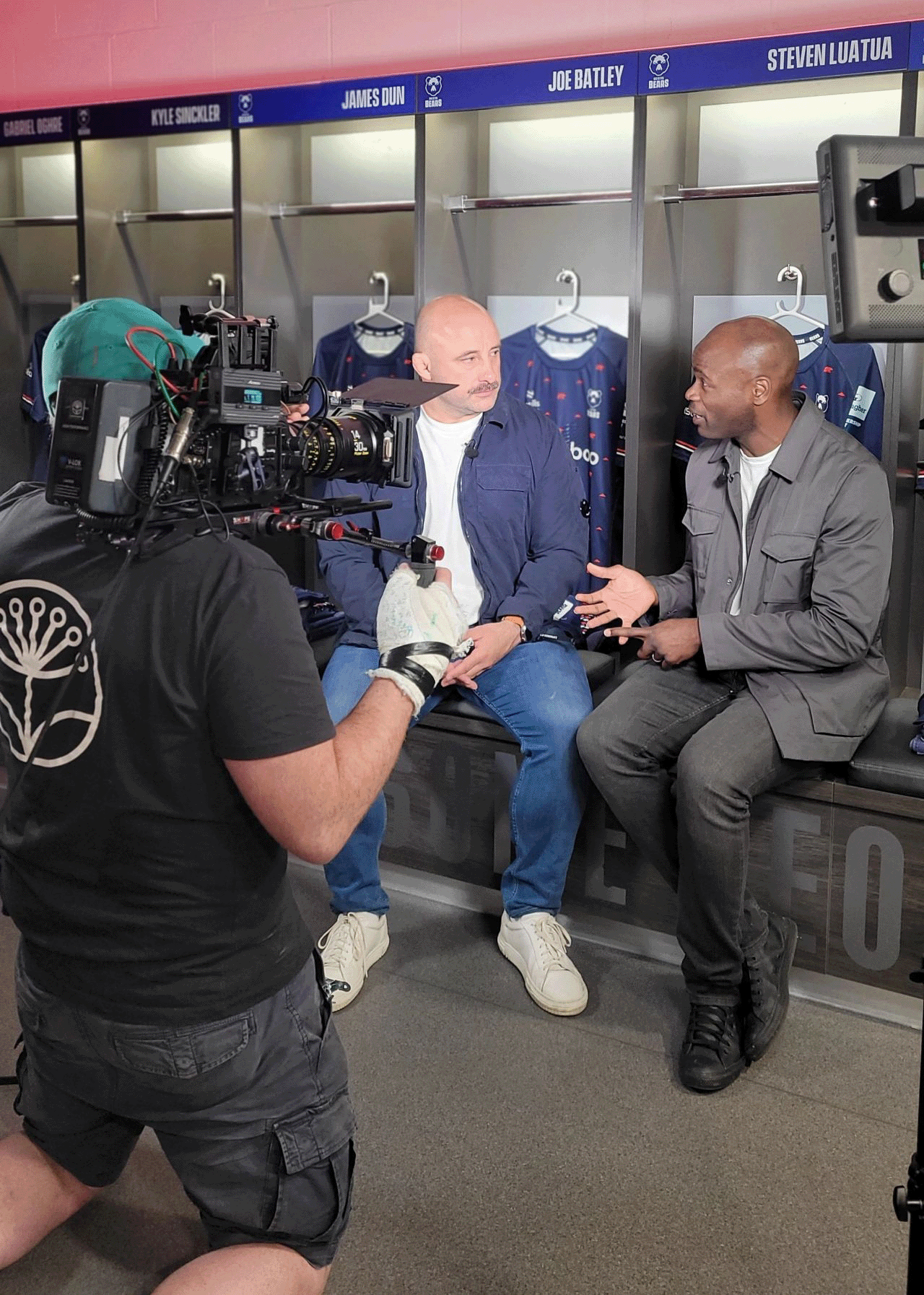
Shooting links on Blackmagic URSA 12k for ITV’s Prem Rugby Highlights
Why We Aren’t a "Sony House": The Blackmagic Method
It’s one of the most common questions we get asked in the industry: “Why doesn’t Moon Carrot shoot on Sony?” To understand the answer, you have to go back to 2021 when Moon Carrot Media was first born. Like most start-ups, our initial capital was modest. Operating out of Devon, rather than one of the major UK production hubs, we faced a unique riddle: how could we offer jaw-dropping value that would entice global brands to work with us, without ever compromising on the ultimate quality of the image?
Our answer was simple: offer seamless, multi-camera shooting as standard. Very few projects these days—even with a single operator—rely on just one camera angle. We wanted to give our clients that rich, multi-cam depth without charging earth-shattering rates. To pull that off, we turned to Blackmagic Design.
The "iPad Camera" and the Power of Being Different
Our love affair with Blackmagic actually started back in 2015 with the slightly ludicrous original URSA 4K digital film camera. We say ludicrous because it featured a massive flip-out monitor practically the size of an iPad Pro. I fondly remember filming in a packed press conference at Chicago’s Soldier Field stadium, getting some bemused looks from the assembled old-school broadcast camera operators. But despite its quirky form factor, the rich images and the sheer, intuitive ease of the operating system were impossible to argue with—especially at that price point.
It reminded me of a conversation I had with a highly regarded DP a few years back. He was recalling the launch of the superb Canon C300 and how much he absolutely loved shooting with it. The problem? The camera fast became the absolute staple for every single production company in the UK (much as the Sony FX6 and FX9 and before that the FS7 have now). Suddenly, shooting researchers and assistant producers were pulling it out of gear bags on every set. Overnight, that DP's technical point of difference completely disappeared. His advice to me has stuck: Be different. Find a way to stand out from the crowd. Fast forward to launching Moon Carrot, andthat advice was ringing in our ears. Everyone was rushing to buy the exact same mid-tier setups. Instead, we looked at what Blackmagic was doing. They had perfected their recipe, releasing subsequent iterations of the URSA alongside the excellent Pocket Cinema Camera range.
We realised we could purchase an entire fleet of matching Blackmagic bodies for less than the cost of a single Sony FX9. By modifying our Pocket 6K Pro with a rugged PL mount, we could pair them with beautiful cinema glass, ensuring identical colourscience across every single lens. Combined with the power of the Resolve ecosystem, it gave us a distinct point of difference. It was the perfect creative package.
Don’t get us wrong—we love shooting on Sony, RED, ARRI, and Canon when the brief calls for it. But choosing to be different was the right choice then, and it remains the heart of our workflow today. When you're navigating the fast-paced worlds of broadcast and branded content, it all comes down to speed, budget efficiency, and keeping the storytelling simple.
The Blackmagic Edge: Why It Works for Our Clients
1. High-End Value, Grounded Budgets
For branded content, the holy grail is keeping production overheads manageable while delivering pristine, cinema-grade results. Blackmagic aggressively packs "pro" features—like robust internal ND filters, professional XLR audio inputs, and internal ProRes recording—into bodies that don’t require a Hollywood rental budget. This allows us to pitch stunning, high-end aesthetics to our clients while keeping the project entirely cost-effective.
2. The Native DaVinci Resolve Workflow
Branded content moves fast, and our clients love quick turnarounds. Because Blackmagic cameras shoot in native Blackmagic RAW (BRAW), they integrate flawlessly with DaVinci Resolve—the absolute industry standard for colour grading. While other RAW formats can be incredibly heavy and require massive computing power to process, BRAW gives us the immense flexibility of a RAW file (letting us adjust white balance and ISO seamlessly in post) while handling as smoothly as a basic MP4. We can ingest, colour, edit, and export beautiful spots at lightning speed.
3. All-in-One Broadcast Integration
For live broadcasts, multi-cam studio setups, or corporate streams, Blackmagic has completely democratised the industry. Their cameras are built to talk directly to ATEM switchers via a single cable. This means a director can control the camera's iris, focus, shutter speed, and live colour correction remotely from the gallery. To get this level of interconnected control out of other brands, you usually have to invest in incredibly bulky, proprietary fibre-back systems. For many jobs on which we use Blackmagic, we have to integrate the cameras with Sony. The beauty of the ecosystem means that we can design LUTs in Resolve that match the Sony REC 709 look and import them onto the cameras so cutting between the two is seamless.
4. Colour Science with Soul
Blackmagic’s Generation 5 Colour Science punches well territory above its price tag. It handles skin tones beautifully and features an organic, film-like roll-off in the highlights. While ARRI remains the undisputed king of cinema colour, Blackmagic gets surprisingly close for a fraction of the cost, completely bypassing the overly clinical "video" look that older digital systems were often criticised for.
The Honest Trade-Offs: Where Other Brands Win
We believe in total candour, and the truth is that no camera system is perfect for every single scenario. Here is where we happily look to other ecosystems:
1. Autofocus (Sony & Canon):
Blackmagic cameras are built for traditional, manual cinema pulling. If a shoot requires fast-paced, unscripted tracking—like following an athlete at full sprint or run-and-gun vlogging—Sony’s AI-driven autofocus is unmatched.
2. Low-Light Magic (Sony):
While the most recent Blackmagic models features brilliant Dual Native ISO, Sony’s FX series (like the FX3 or FX6) can practically see in the dark. For late-night events or moody, unlit environments, Sony takes the crown.
3. Industry Prestige (ARRI & RED):
There is a distinct psychological weight to certain camera names. If a high-end commercial agency explicitly demands an ARRI Alexa on the call sheet for the prestige factor, we happily adapt to the brief.
The Moon Carrot Verdict
For our branded and broadcast projects, Blackmagic delivers a cinematic, easily malleable RAW image with an interconnected multi-cam ecosystem that just works. It allows us to focus entirely on what matters most: collaboration, creativity, and keeping the storytelling simple.
Does all this mean that we would rule out owning and operating other brands such as Sony or Arri? Absolutely not. We’ve recently added the fabulous Panasonic Lumix S1 II to our inventory and and as the business continues to grow, we will consider new kit as it comes onto the market but Blackmagic has been the rock on which the business has been built and continues to offer a quality and workflow that clients (and us) love.